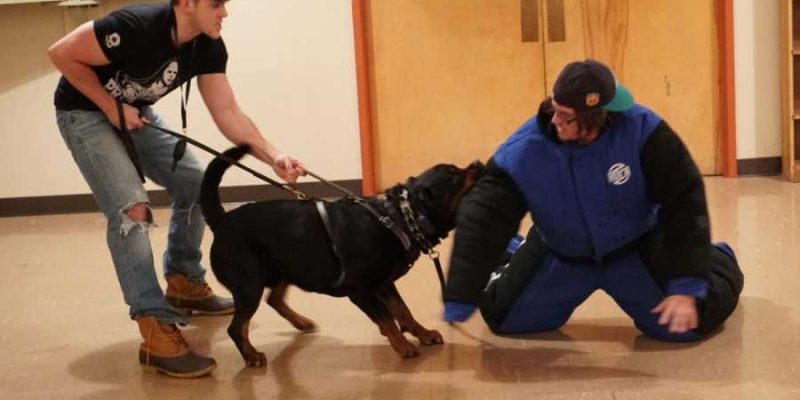
 By David Pike
Choosing a protection dog is not the same as choosing a pet with an impressive bark or a powerful build. The public image of guard work often leans too heavily on size, speed, or intimidation, yet those features tell only a small part of the story. In practice, the dogs that protect families well are usually the ones with the strongest balance of judgement, stability, and trainability. A dog that reacts at the wrong time, misreads ordinary situations, or struggles to recover from stress can create problems rather than solve them.
A professional dog trainer from TotalK9 says the best personal protection dogs are not selected simply for force or appearance, but for their ability to stay clear-headed, responsive, and dependable in real domestic settings. That point matters because most owners are not looking for a dog suited to dramatic confrontations. They want a dog that can live safely in a home, read a situation properly, and step up only when required.
That is why the most important traits are not always the most obvious ones. A serious protection prospect should be evaluated through the lens of daily life first. Can the dog settle in the house? Can it cope with visitors, noise, travel, and changing routines? Can it take direction when excitement rises? These questions are more useful than assumptions based on breed alone.
The strongest protection dogs combine natural ability with temperament that fits family life. The six traits below matter most because each one affects whether the dog can protect with control rather than chaos. Together, they separate a genuinely reliable dog from one that merely looks the part.
Nerve Strength: The Foundation of Sound Protection Work
If one trait deserves to be ranked first, it is nerve strength. This is the quality that allows a dog to remain steady under pressure instead of becoming frantic, fearful, or erratic. A dog with strong nerves does not fall apart when faced with loud noise, unfamiliar places, fast movement, or social pressure. It stays present, thinks clearly, and keeps functioning. In the context of protection work, that steadiness is essential because a dog cannot make good decisions if its emotions overwhelm it.
Nerve strength is often misunderstood as simple boldness. In reality, a noisy, overexcited dog may look confident while lacking real composure. Likewise, a dog that barks readily at the gate may be showing insecurity rather than strength. Trainers look for something quieter and more dependable: a dog that notices pressure, absorbs it, and stays engaged without becoming chaotic. That quality is what allows training to progress in a safe, structured way.
For families, this trait has obvious value beyond protection. Daily life exposes dogs to delivery drivers, visiting relatives, children’s friends, traffic, sudden sounds, and unexpected disruptions. A dog with weak nerves may become suspicious, reactive, or difficult to manage in ordinary situations. A dog with strong nerves is far more likely to remain stable and predictable, which is exactly what responsible owners need.
This is also the trait that helps a dog recover. Even solid dogs can be startled, but the better ones regain their composure quickly. That recovery ability matters because real-world environments are messy and imperfect. Protection dogs do not operate on training fields alone. They live in homes, travel in cars, walk through parks, and encounter the unpredictable behaviour of people. A dog that can recover and reset is safer, easier to handle, and more reliable when it counts.
Without nerve strength, every other desirable trait becomes harder to use well. Drive, athleticism, and courage mean little if the dog cannot stay composed under stress. That is why experienced trainers tend to treat stable nerves as the base on which everything else rests.
Discernment: Knowing When Not to React
A genuine protection dog needs to recognise threat, but it also needs to recognise normal life. Discernment is the trait that prevents a capable dog from becoming a liability. It is the difference between a dog that can distinguish tension from routine and one that treats every raised voice, abrupt gesture, or stranger at the door as a crisis. For household living, that distinction is crucial.
Many people assume protection ability is mainly about willingness to engage. In fact, restraint is often the more impressive quality. The better dog does not rush to conflict. It observes, processes, and waits for clear information. That makes the dog easier to live with and far safer around visitors, tradespeople, and the everyday movement that comes with a busy family home. Discernment supports confidence because the dog is not constantly guessing or overreacting.
This trait is partly shaped by genetics and partly refined through training. Some dogs are naturally more measured and thoughtful, while others are quicker to react. A skilled programme can improve judgement, but it cannot fully replace the dog’s underlying temperament. That is why assessment matters so much early on. A dog that lacks proper discrimination may look sharp in controlled demonstrations, yet prove unsuitable for real family life where ambiguity is common.
Discernment also protects the owner. A dog that misreads situations can draw the handler into conflict, legal risk, or serious management problems. By contrast, a dog that holds steady until the picture is clear gives the family time, space, and control. It helps keep responses proportionate and grounded. In the real world, that matters far more than theatrical displays of aggression.
Among personal protection dogs, discernment is one of the clearest markers of quality because it reflects maturity of mind rather than surface intensity. A dog that knows when not to react is often the one most worth trusting when reaction is genuinely necessary.
Trainability: The Trait That Turns Potential into Reliability
A dog may have physical presence, courage, and strong instincts, yet still fall short if it cannot be trained to a high standard. Trainability is what converts raw ability into dependable behaviour. It includes focus, responsiveness, willingness to learn, and the capacity to work through clear guidance without shutting down or becoming oppositional. In practical terms, trainability is what allows a dog to fit into structured life instead of merely operating on impulse.
This matters because protection work is not a single behaviour. It is a framework of obedience, environmental exposure, social control, handler communication, and carefully developed response patterns. A dog must learn to switch between calm domestic behaviour and high engagement without confusion. That takes repetition, clarity, and a dog that can absorb lessons consistently. Some dogs learn quickly but become sloppy under pressure. Others show enthusiasm yet resist control. The strongest candidates combine willingness with steadiness.
For family homes, trainability makes daily management easier. A dog that responds promptly to commands, settles when asked, and maintains routines under distraction reduces stress for everyone involved. That is particularly important where children, guests, or changing schedules are part of the picture. Reliable training does not remove the need for supervision, but it does create a margin of safety that cannot be improvised later.
Trainability also affects long-term ownership. Even a well-prepared protection dog needs ongoing handling, reinforcement, and standards. Owners are not buying a fixed product that runs on autopilot. They are taking responsibility for a living animal whose habits must be maintained. A trainable dog allows that relationship to work. The dog remains open to guidance instead of drifting into self-directed behaviour.
When professionals assess prospects, they often value this trait highly because it predicts what the dog will be like to live with after the excitement of selection has passed. Potential is appealing, but reliability is what owners actually need. Trainability is the bridge between the two.
Social Stability in the Home: Protection Begins with Control
A family protection dog must first prove that it can live appropriately as part of a household. Social stability is the trait that keeps the dog manageable, calm, and trustworthy in close daily contact with people. That includes behaviour around family members, invited visitors, familiar routines, and ordinary household disruption. Without this stability, even a dog with excellent working ability may be unsuitable for home life.
There is a common mistake in thinking that a dog meant for protection should be generally suspicious or aloof at all times. In reality, constant suspicion is exhausting and often unsafe. A dog living in a family setting needs to understand that most of life is uneventful. It should be able to settle in shared spaces, accept guidance from its handlers, and move through the home without displaying unnecessary tension. True control is not about suppressing the dog. It is about the dog understanding its role clearly enough to remain composed.
This quality matters especially in British households, where homes can be smaller, visitors more frequent, and neighbourhood life closer together than some owners anticipate. Doors open, parcels arrive, friends call round, and children’s activities create a steady flow of movement. A socially unstable dog will struggle with that environment. It may become over-alert, vocal, or difficult to switch off. Over time, that creates stress for both dog and owner.
A stable dog, by contrast, conserves energy and attention. It is not spending the day scanning for conflict that does not exist. That allows it to respond more effectively if a genuine problem arises. Protection begins with control because a dog that cannot behave properly in peace is unlikely to behave properly in pressure.
For many families, this trait is the one they feel most in daily life. They may rarely face a direct security threat, but they live every day with the dog’s manners, emotional balance, and ability to settle. In that sense, social stability is not separate from protection quality. It is a major part of it.
Defensive Courage Without Recklessness
Courage is often treated as the defining quality in protection work, but not all courage is useful. The trait that matters is defensive courage without recklessness. In other words, the dog must be willing to confront pressure when necessary, yet not so impulsive that it charges into situations without control or thought. That balance is far more valuable than showy intensity.
A reckless dog may appear powerful at first glance, but rashness is difficult to manage and dangerous to own. Such dogs can escalate too quickly, fail to read the handler, and respond more from arousal than judgement. Defensive courage is different. It is grounded, purposeful, and connected to the situation. The dog does not seek chaos, but it does not shrink from it either. When properly trained, that quality gives the handler something far more useful than dramatic behaviour: measured commitment.
This distinction matters because real incidents are rarely neat. They involve movement, confusion, noise, and uncertainty. A dog that panics or overcommits can create risk for everyone nearby. A courageous but thoughtful dog is more likely to stay connected to its handler and remain effective under direction. That link between bravery and control is what professionals look for in serious candidates.
It is also why experience matters in selecting and preparing such dogs. Courage cannot be judged by noise alone. Some fearful dogs make a great deal of noise. Some stable dogs appear quieter but possess stronger core resolve. What matters is whether the dog can move forward under pressure without becoming wild, frantic, or disconnected.
For owners, this trait should be understood as a safety feature as much as a working asset. The aim is not to have the most reactive dog on the street. The aim is to have a dog that can stand firm with clarity. That kind of courage is less dramatic, but it is far more dependable.
Recovery and Switch-Off Ability: The Trait Owners Notice for Years
The final trait is one that many first-time buyers underestimate until they live with the dog: recovery and switch-off ability. This is the dog’s capacity to come down from stimulation, settle after excitement, and return to calm behaviour without prolonged agitation. It may sound less impressive than courage or drive, yet in long-term ownership it can be one of the most important qualities of all.
A dog that struggles to switch off can be difficult in countless ordinary situations. It may remain aroused after a visitor leaves, pace after hearing noise outside, or take too long to settle after training. Over time, that creates wear on the household and on the dog itself. By contrast, a dog with strong recovery can experience excitement, do the work required, and then return to a normal domestic state. That emotional flexibility is a hallmark of sound temperament.
This trait supports welfare as well as function. Dogs that never fully relax often carry chronic stress, and stressed dogs are harder to manage, harder to train, and more likely to make poor decisions. Good recovery helps preserve clarity. It keeps the dog available for guidance instead of trapped in lingering arousal. In family settings, that can make the difference between a dog that fits the home and one that dominates it.
Owners often discover that this is the trait they appreciate most after the initial selection phase is over. The dog that can rest quietly in the evening, travel without fuss, and settle after activity becomes much easier to live with over the years. That does not reduce its protective value. It strengthens it, because energy is being used with purpose rather than wasted on constant tension.
When these six traits come together, the result is not merely a hard dog or an impressive dog. It is a balanced one. And balance, far more than bravado, is what makes protection credible, safe, and genuinely useful in the real world.